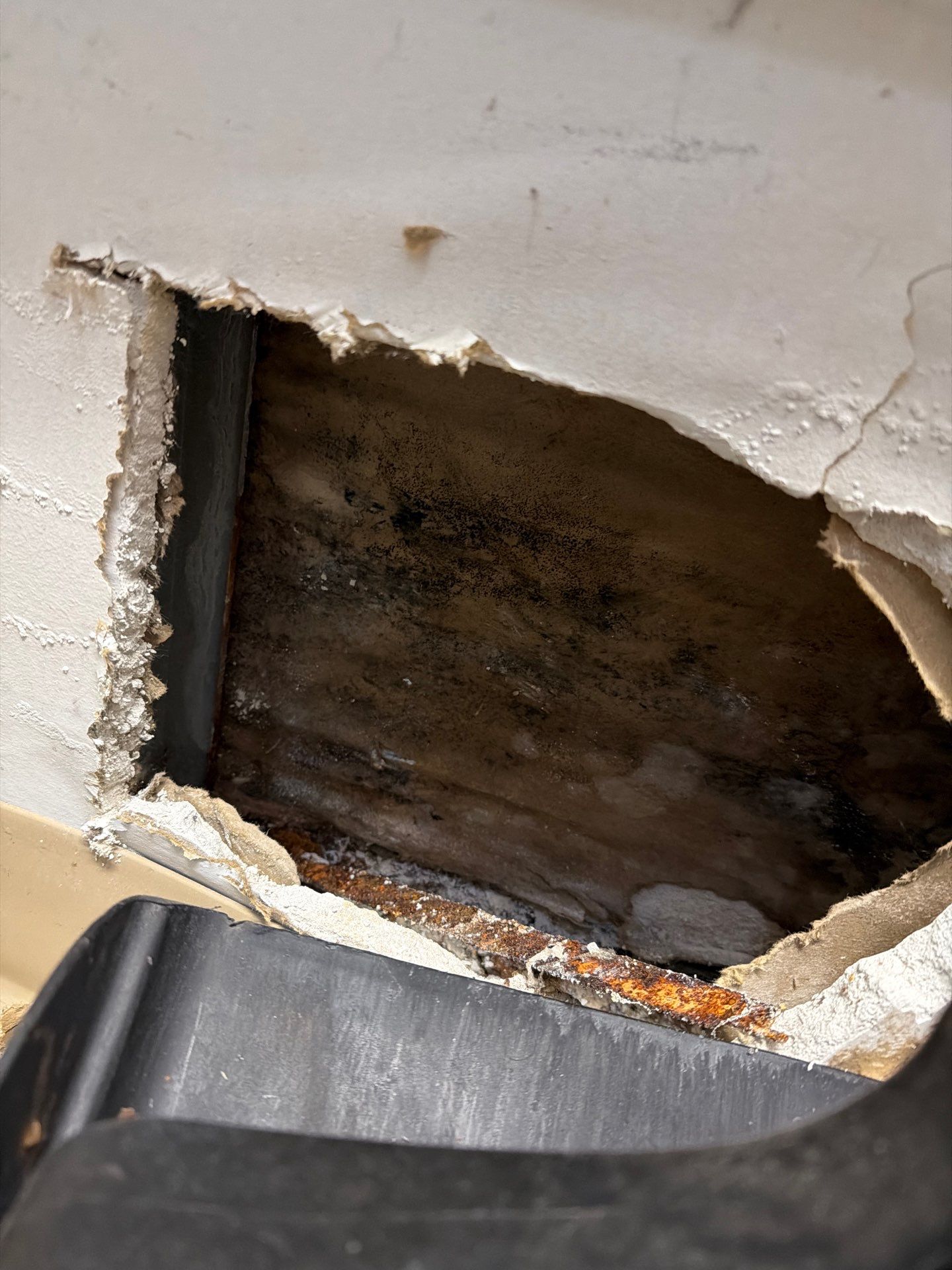
The Problem: You Cannot See What Mold Spores Are Doing in Your Air
Visible mold on a wall is the obvious part. The harder part is what is floating around the rest of your house. Spores are microscopic, they travel on air currents, and they settle into HVAC returns, carpet fibers, and upholstered furniture far from the original water event. You can have a small patch of growth under a sink and elevated spore counts in three bedrooms because the air handler has been pulling contaminated air through the house for weeks.
This is why guessing at the size of a mold problem in your East Harbour home almost always shortchanges the cleanup. Without a baseline reading, there is no way to know which rooms are affected and which are clean, and no way to confirm later that the work actually fixed anything.
The Solution: Pre Remediation Air Sampling Done by a Third Party
Pre remediation testing means an industrial hygienist comes out before any work begins, takes air samples from inside the home, and takes at least one outdoor control sample on the same day. The lab counts spore types and concentrations, then compares indoor to outdoor. Outdoor air always has some mold in it. The question is whether your indoor readings are elevated, what species are present, and whether any of those species point to active indoor growth rather than tracked in spores.
A useful pre test usually includes:
- One outdoor control sample collected the same day, same weather conditions.
- One indoor sample per affected area, plus one in a known clean room for comparison.
- Surface or tape lift samples on any visible suspicious growth to identify species.
From there we can scope the project honestly. Sometimes the test confirms a small, contained issue. Sometimes it shows the problem is larger than it looks, which changes the containment plan and the price. Either way, you are making decisions from data instead of a sales pitch. If the original water event is still recent, our guide on mold after water damage covers how spore counts typically progress in the first weeks.
Why Independence of the Lab Matters
East Harbour Water Restoration deliberately does not run the lab that processes the samples. The hygienist is hired separately, the samples ship to a third party accredited lab, and the results come back to you directly. That separation matters because it means the company doing the remediation cannot influence the numbers that justify the work. If a contractor offers to test their own work for free, that is a red flag worth asking about. The whole point of testing is independent verification, and a report only carries weight with an adjuster or a future buyer if the chain of custody is clean.
The Problem: Skipping Testing and Hoping the Cleanup Was Enough
We get calls every month from East Harbour homeowners who paid for mold work somewhere else, never got post testing, and are now dealing with symptoms again six months later. Without a clearance test, there is no proof that:
- The containment held during the work.
- Spore counts inside the work area dropped back to normal background levels.
- HVAC and adjacent rooms were not cross contaminated during demo.
Insurance carriers increasingly want to see clearance documentation before they close out a claim, and future buyers of your home will absolutely ask. "We cleaned it up" is not an answer that holds up under a home inspection.
The Solution: Tie Testing to a Moisture Investigation
Before we agree to remediate anything, we map moisture in the affected area with meters and, when needed, thermal imaging. If the source is a slow plumbing drip, a roof issue, or condensation from an oversized AC, that gets documented and repaired first. For hidden sources, our process for finding hidden water damage early is the starting point. Testing then verifies the cleanup. It does not replace the detective work.
When a East Harbour homeowner calls East Harbour Water Restoration about suspected mold, a crew can typically be on site within 2 hours to start the moisture investigation, so the testing scope is informed by what we actually find rather than guesswork over the phone.
The Problem: Testing Without Fixing the Water Source
Air testing tells you about spores. It does not tell you where the moisture is coming from. We have seen homeowners spend money on three rounds of testing in a year because nobody traced the leak feeding the growth. Mold needs water. Cut the water and the problem stops returning.
The Solution: Post Remediation Verification and Clearance Testing
Post remediation verification has two parts. First is the visual inspection, which the hygienist performs while containment is still up. They check for visible dust, debris, residual staining, and moisture readings in the materials that stayed. If the visual fails, we go back in and address what they flagged before any air sample is taken. There is no point in sampling air over a dusty floor.
Once visual passes, air samples are pulled inside containment and compared to a fresh outdoor control. For clearance, indoor counts should be at or below outdoor levels, and the species profile should look like normal outdoor air rather than the elevated indoor signature from the pre test. If the numbers come back clean, the containment comes down, the project closes, and you get a written report you can hand to your insurance adjuster or keep for resale. Following the same general framework laid out in IICRC water restoration standards keeps the process defensible.
If clearance fails, and it does occasionally, the response is straightforward. We re clean the area, run additional HEPA air scrubbing, and retest. The cost of a second clearance round is small compared to closing out a job that was not actually finished. Common reasons for a failed clearance include settled dust that was missed during final wipe down, an HVAC register that was not properly sealed during demo, or a hidden pocket of growth behind a baseboard that the original scope did not capture.